Monday, July 4, 2016

Wednesday, July 1, 2015
Profile:
Profile:
Height: 5'9"
Weight: 186
Dexterity: Right
What's in the bag?
Driver: Taylormade Burner 9.5
3 Wood: PING G15.
5 Wood: PING G15.
Irons: PING 3-pw S56.
Wedges: SW-PING Tour S 56. PING Eye2 XG
Putter: Carbite-Mallet.
Height: 5'9"
Weight: 186
Dexterity: Right
What's in the bag?
Driver: Taylormade Burner 9.5
3 Wood: PING G15.
5 Wood: PING G15.
Irons: PING 3-pw S56.
Wedges: SW-PING Tour S 56. PING Eye2 XG
Putter: Carbite-Mallet.
Monday, March 31, 2014
Different tours through the years. #2
Company golf tournaments are fun, the picture below is from South Mountain GC, UT.
This was pretty fun cause I had my wife-Mindy and Daughter Sam playing on the same team where we work at.
We got 5th place that year.
but anyway, they are fun and we do it every year and can't wait for this year and just play, but the only thing I don't like is every body cheats at these tournaments but where here to have fun anyways.

Ben L Tour:
During the Pepsi Tour Ben Lomond G.C. my wife/caddie for me, it was pretty much a flat course, I was on a par 3, 156 yards, 14th hole, hole in one get the PT Cruiser, I pull out my 7I and my wife what club and she said "club down, club down" so I got to my bag and grabbed an 8I, as I hit the ball, it landed in front about 5 to 7 ft away from the hole and started to roll towards the hole missed it about that looks like 3 to 5 inches away from the hole then rolled past it about half a club length, I thought it was going in but made birdie (No Car won today) the best time golfing is when my wife came along and caddied for me, she is actually a good caddie.
I had my brother caddied for me (Once) at the Spanish Oak GC Tour in Utah, he didn't know to much about golf but I made him carry my golf bag but we had lots of fun, didn't do to good at this tournament.
Finding my Game #7 The Golf Course
I went golfing with my brother-in-law Todd at Riverbend Golf Course, it was a windy day, 20-30 miles winds or so, second time playing the course, we headed to the 8th tee - Par 4, As iI pulled out my driver, I looked down the fairway, dog leg a little to the left, winds blowing right to left, I started to think of Painted Desert G.C 2nd Hole (Pro Tour-NPGT) for being a tight fairway, as I aimed towards the large tree right side of picture, I hit a nice straight shot but as the wind took the ball it moved at least 10 yards left hitting the right side fairway and rolled to the other side cause of the slope of the fairway and made green and made birdie, my brother-in-law didn't to bad on this hole, 3 over par.
Photo-Riverbend #8 Hole

Saturday, March 29, 2014
At the Range
Today I had an interesting day at the range which I thought was pretty neat, when I was practicing my long game, I noticed a guy that was in back of me for about 10 minutes or so, he came up to me when i was cleaning my club and said "How do you hit so straight and have a smooth swing?" all i said was, it's how I do my pre-routine, when I'm at addressing the ball, i don't think of nothing, except where the ball is going on the last glimpse before i hit the golf ball (Visualizing) After I told him, I noticed he was doing what I said, when he left he thanked me and told me that he noticed a big differents, just the smallest change can make a big differents.

Wednesday, October 10, 2012
Pepsi Tour 08/27/12
Pepsi Tour
California was fun, I took my family, my wife and daughter and my parents, we arrived at western hills country club in Chino California. about 9am in the morning, there were a couple of pros on the practice range, as I approached the driving range I felt very good, my swing was nice and straight and in control and very positive, as it was getting closer to 11am, our tee time, a man approached the tee, he was head of the Pepsi Tour, he explained some of the rules that was a little different out on the Course, the he started to call our names and where we live, after he called my name, it was my turn at the tee, my first hit was a nice, in Fairway middle right, it was about 160 yards to the green with the sand trap on the front right side, I pulled my 7 iron out of my bag, I hit a wonder full hit, went over the sand trap and on the green about 4ft away from the hole, I putter and pared it. as my family followed me on each hole I really don't remember seeing them being there, focused I guess. The course was pretty nice thou, fairway's were tight, green were a little slow (Very green) lot more greener than Salt Lake City golf courses (Dryer) and about 89 degree's in Cal which was nice. The other professional golfers that was with me were pretty nice,but serious golfers which most of them that's there job.
I did have a bad hole on the 18th green, Par 4, pond in front left which closed in with tree's then opened up on the fairway and doglegged to the right, I pulled out my driver and hit, the golf ball went in between the tree's (Opening) and started to go left, which there was an stream & driving range, in my case, i could not find my ball, which i took a +3 on that hole, after we were done, we handed our score card in and did pretty good not ever played that course before, I would love to play that course again, it was a beautiful course, it was my dad's first time at a pro tourney and watching me at a pro tour which i thought was pretty cool and special for me (My Dad is not much into sports as i am) I new my mom would watch me play anyways (She's a Mom) if i asked her, my wife and kids would watch me anyways cause they love me, but anyways, I'm thinking of doing the Utah Open and or The Provo Open cause there a little closer to my house (Cheaper, no hotels, etc), which i already started training for.
The Pepsi Tour is worth playing in.


California was fun, I took my family, my wife and daughter and my parents, we arrived at western hills country club in Chino California. about 9am in the morning, there were a couple of pros on the practice range, as I approached the driving range I felt very good, my swing was nice and straight and in control and very positive, as it was getting closer to 11am, our tee time, a man approached the tee, he was head of the Pepsi Tour, he explained some of the rules that was a little different out on the Course, the he started to call our names and where we live, after he called my name, it was my turn at the tee, my first hit was a nice, in Fairway middle right, it was about 160 yards to the green with the sand trap on the front right side, I pulled my 7 iron out of my bag, I hit a wonder full hit, went over the sand trap and on the green about 4ft away from the hole, I putter and pared it. as my family followed me on each hole I really don't remember seeing them being there, focused I guess. The course was pretty nice thou, fairway's were tight, green were a little slow (Very green) lot more greener than Salt Lake City golf courses (Dryer) and about 89 degree's in Cal which was nice. The other professional golfers that was with me were pretty nice,but serious golfers which most of them that's there job.
I did have a bad hole on the 18th green, Par 4, pond in front left which closed in with tree's then opened up on the fairway and doglegged to the right, I pulled out my driver and hit, the golf ball went in between the tree's (Opening) and started to go left, which there was an stream & driving range, in my case, i could not find my ball, which i took a +3 on that hole, after we were done, we handed our score card in and did pretty good not ever played that course before, I would love to play that course again, it was a beautiful course, it was my dad's first time at a pro tourney and watching me at a pro tour which i thought was pretty cool and special for me (My Dad is not much into sports as i am) I new my mom would watch me play anyways (She's a Mom) if i asked her, my wife and kids would watch me anyways cause they love me, but anyways, I'm thinking of doing the Utah Open and or The Provo Open cause there a little closer to my house (Cheaper, no hotels, etc), which i already started training for.
The Pepsi Tour is worth playing in.


Wednesday, May 9, 2012
My scottish terrier (Scottie) taken by Melanoma Cancer-Died 5/5/12
http://scottishterriernews.us4.list-manage.com/track/click?u=4fa411510c29ed4858375091e&id=179ed326a8&e=a23ea189e9 RIP Scottie, taken by cancer when he was far too young by ANNB on MAY 8, 2012 · 5 COMMENTS in SCOTTISH TERRIER HEALTH AND SAFETY , TRIBUTES TO MUCH LOVED SCOTTIES Samantha asked the Scottish Terrier and Dog Newsto do a memorial for her dog Scottie who died last week. She wrote: I would really appreciate and be forever grateful, if you would please share Scottie’s story as a memorial for this brave little soul and also to raise cancer awareness to other Scottie owners. Cancer is much more prominent in Scotties then other breeds. He was a wonderful Scottie and the smartest dog I have ever had the pleasure of knowing. He was sweet, charming, energetic, loving, obedient, and just always brought a smile to his families faces. He would talk to us and respond when we would talk to him. He loved helping us hunt for mice and was so joyous when he caught one the first and only time, he strutted around the house for days just as proud as can be. He was and always will be my best friend. I would sit on the stairs every morning before school and share a peanut butter sandwich with him. He is going to be deeply missed and I do not think our hearts will ever stop aching for him. Scottie has been battling Melanoma Cancer for 6 months now, he is only 4 years old… It all started out around October 2011, Scottie had a dime sized growth on his knee. We took him to the vet, he and said to not pay much attention to it unless it started to grow or bother Scottie or us. So we left it alone and watched it. It started irritating Scottie and growing. We took him back to the vet in November, the doctor removed it with out doing on autopsy first or checking a sample under the microspore. We then did not know any better. Before his stitches completely healed, another growth started, but was growing very rapidly along with multiple pea sized growths going up to his leg to the base of his abdomen. We immediately took him back to the vet, it was around late November. He would not tell us what it was and told us we had to go to a specialist. He referred us to an oncologist. We got in early December, she took a sample and looked at it under the scope – melanoma cancer was the diagnosis. She told us with how aggressive it is we really did not have much time left or many treatments we could do. Most of the treatments take 6-8 weeks to even get into the system and another couple of weeks to start helping, if we removed his leg it would barley heal and the cancer would possible only spread faster when opened up. She also told us, that no matter which road we take there is only an extremely small chance any of them will help. She recommended we let Scottie live a more fulfilled shorter life and put Scottie on


Remedol. Scottie did very well at first, the Remedol slowed the cancers growth and he was his wonderful little self for many months. This month has not been the case. The Remedol stopped working because Melanoma evolves and learns how to get around medications and treatments. The Melanoma has become immune to the medication. All we could to for Scottie when this happened was make him as comfortable as possible and enjoy every good day we have with him. RIP, Scottie. Our sympathies go out to Samantha and our family.
Friday, September 30, 2011
The Green Jacket of 2011-DELSOL TOUR
Well, this year 2011 Company Golf Tour-Best Ball, We/Me, Wife-Mindy, Daughter-Sam, Gary, Rae Won 1st place -4 and we a got Blue-Ray DVD player which was pretty nice and I Findley got the Green Jacket (My Goal for this Year) if it wasn't for my wife i would not got the green jacket.
Everybody did really well, my daughter Sam can hit (Driver) about 160-170 yards now.
Rea on a par 3 hit it on the green (First time golfing) which did beter then any one of us, i thought it was pretty cool.
My Wife and Gary did really well on the greens and short game.
Me, I did Really well, been working on my driving-Driver/3-5 Wood alot and it showed, the beginning of the year playing on the NPGT, when using my Driver the ball went all over, i didn't do to good so i've been working on it for the next National Professional Golf Tour.


My Team:Gary, Sam, Rae, Mindy, Me-Doug and Jeff P President of DelSol
Next year goal: -6 to -8 under and take 1st place again.
Everybody did really well, my daughter Sam can hit (Driver) about 160-170 yards now.
Rea on a par 3 hit it on the green (First time golfing) which did beter then any one of us, i thought it was pretty cool.
My Wife and Gary did really well on the greens and short game.
Me, I did Really well, been working on my driving-Driver/3-5 Wood alot and it showed, the beginning of the year playing on the NPGT, when using my Driver the ball went all over, i didn't do to good so i've been working on it for the next National Professional Golf Tour.


Next year goal: -6 to -8 under and take 1st place again.
Wednesday, July 20, 2011
"To succeed, you must believe in yourself"
Joan A. King, Sports Hypnotist - www.positivementalimagery.com
This website I came across (Positive Mental Imagery) It is one of my Top 3-Mental & Positive Thinking Websites, I just wanted to share something from this website (I hope they don't mind) that worked for me and should work with you.
"This is somethimg I totally believe in"
What do Hilary Lunke, Ben Curtis, Annika Sorenstam, Jim Furyk and Tiger Woods have in common?
They all believe they can win.
To play at your best you must believe in yourself. You must believe in your body's ability to perform. You must believe that you can get better.
Self-doubt means that you question your competence to hit the ball where you want it to go. As you begin to doubt, you tell your body how to swing the club, which then becomes more difficult, mechanical and forced.
Anxiety begins when you first doubt your ability. There is no doubt in sinking a 1-inch putt. When you feel the pressure and miss a 4-footer to win, you create a self-fulfilling prophesy that you can't sink 4-footers.
These world-class champions know that no matter how much pressure there is to win a major, they feel less anxiety when they do not doubt that they can win. They trust their competence even when they are surrounded by doubting voices.
Playing to his potential is every golfer's dream and involved much more than just swinging the golf club. The inner or mental game of how you think and feel about yourself is equally as important.
To play the game to your potential means believing in yourself by controlling your thoughts, emotions, memories, personality and reactions.
Here are Eight Mental Techniques for training your brain to trust in your competence:
Have a Positive Attitude: Golf is a game of misses and your have to lay your missed shots. All misses in golf are mental errors. Your brain tells your body what to do. If you don't give the right messages, you don't get the results you want.
Stop thinking of the missed shot and focus on believing that you can recover with the next shot.
Champions control how they react to what is happening to them. Have realistic expectations. Your golf game does not reflect on who you are as a person, but your reaction to your golf shots does. Remember that you play the game for fun. Perfectionism only increases stress and tension.
Trust your ability: Once you have learned to swing the golf club, you don't lose your swing. It is recorded in your brain. Once a motor skill is learned it is never forgotten, and after a year without practice, the performance level returns to 80 percent after 10 days of retraining.
Don't fall into the trap of constantly thinking there is something wrong with your golf swing. Thinking will make it so! Believe in your ability no matter what the results are. Trust that you can improve.
Use positive self-talk: When you tell yourself, "Don't hit the ball in the water," your subconscious mind produces an image of the ball going into the water. Unless you change the image (hitting to the target), your body will respond accordingly. It wasn't your swing that was faulty; it was your failure to run your brain correctly.
We all have negative thoughts that we replay in our heads. These are voices of fear from your past experiences, or anxious thoughts of the results that you think might happen. To stay in the NOW, put all self-talk in positive, present tense, active verbs. Instead of saying I can make this putt, say I am making it.
Let go of mental interference: Your body knows without conscious thought how to hit the golf ball. Being in the zone is the absence of mental interference. On the golf course, stop giving yourself instruction and judging your performance. Relax and let your unconscious mind do what you have trained it to do.
Let go of all thoughts and feelings stemming from doubt and fear of failure. Use your energy to program what you want, not what you don't want. See the good in every shot. If it wasn't the result you wanted, learn from your mistake.
Relax your body and mind: It is physically impossible to be relaxed and anxious at the same time. When you are playing, you must be in a relaxed state to play well. The way you relax your mind and body in golf is by controlled, deep breathing.
Changing your breathing can change your thoughts and emotions. Taking a deep breath through your abdomen before every shot will relax your mind and your muscles. Your swing will be smoother and easier.
Focus on the task at hand: You have a very active mind. Be decisive! Once you make up your mind, don't change it.
Don't hit any shot until you have completely prepared your mind. To stay in the process of creating your shot, use the same preshot routine every time. Your brain will then know automatically what you want and give you consistent results.
Anchor your good shots: Compliment yourself after hitting a good shot. Don't negate it by saying, "It's about time." Smile inside and congratulate yourself and anchor that good feeling.
You created the good feeling. This is what success feels like. This is what you are waiting for. Anchoring your good shots with good feelings will train your brain to bring up the memory more easily, especially under pressure.
Mental rehearsal: Practice makes perfect, but only perfect practice makes perfect. The only place you can practice perfectly is inside your head. At night or in the morning while you are half-awake is the best time to practice your golf game.
The mental process to practice is:
-See yourself practicing hitting every shot perfectly.
-Feel prepared.
-Visualize yourself playing; calm, relaxed, and confident.
-Experience the good feeling when you have played well.
Rehearse what you want to happen. Program your mind. Scientists have found that your mind is actually programming your muscles as you visualize yourself hitting the perfect shot.
This website I came across (Positive Mental Imagery) It is one of my Top 3-Mental & Positive Thinking Websites, I just wanted to share something from this website (I hope they don't mind) that worked for me and should work with you.
"This is somethimg I totally believe in"
What do Hilary Lunke, Ben Curtis, Annika Sorenstam, Jim Furyk and Tiger Woods have in common?
They all believe they can win.
To play at your best you must believe in yourself. You must believe in your body's ability to perform. You must believe that you can get better.
Self-doubt means that you question your competence to hit the ball where you want it to go. As you begin to doubt, you tell your body how to swing the club, which then becomes more difficult, mechanical and forced.
Anxiety begins when you first doubt your ability. There is no doubt in sinking a 1-inch putt. When you feel the pressure and miss a 4-footer to win, you create a self-fulfilling prophesy that you can't sink 4-footers.
These world-class champions know that no matter how much pressure there is to win a major, they feel less anxiety when they do not doubt that they can win. They trust their competence even when they are surrounded by doubting voices.
Playing to his potential is every golfer's dream and involved much more than just swinging the golf club. The inner or mental game of how you think and feel about yourself is equally as important.
To play the game to your potential means believing in yourself by controlling your thoughts, emotions, memories, personality and reactions.
Here are Eight Mental Techniques for training your brain to trust in your competence:
Have a Positive Attitude: Golf is a game of misses and your have to lay your missed shots. All misses in golf are mental errors. Your brain tells your body what to do. If you don't give the right messages, you don't get the results you want.
Stop thinking of the missed shot and focus on believing that you can recover with the next shot.
Champions control how they react to what is happening to them. Have realistic expectations. Your golf game does not reflect on who you are as a person, but your reaction to your golf shots does. Remember that you play the game for fun. Perfectionism only increases stress and tension.
Trust your ability: Once you have learned to swing the golf club, you don't lose your swing. It is recorded in your brain. Once a motor skill is learned it is never forgotten, and after a year without practice, the performance level returns to 80 percent after 10 days of retraining.
Don't fall into the trap of constantly thinking there is something wrong with your golf swing. Thinking will make it so! Believe in your ability no matter what the results are. Trust that you can improve.
Use positive self-talk: When you tell yourself, "Don't hit the ball in the water," your subconscious mind produces an image of the ball going into the water. Unless you change the image (hitting to the target), your body will respond accordingly. It wasn't your swing that was faulty; it was your failure to run your brain correctly.
We all have negative thoughts that we replay in our heads. These are voices of fear from your past experiences, or anxious thoughts of the results that you think might happen. To stay in the NOW, put all self-talk in positive, present tense, active verbs. Instead of saying I can make this putt, say I am making it.
Let go of mental interference: Your body knows without conscious thought how to hit the golf ball. Being in the zone is the absence of mental interference. On the golf course, stop giving yourself instruction and judging your performance. Relax and let your unconscious mind do what you have trained it to do.
Let go of all thoughts and feelings stemming from doubt and fear of failure. Use your energy to program what you want, not what you don't want. See the good in every shot. If it wasn't the result you wanted, learn from your mistake.
Relax your body and mind: It is physically impossible to be relaxed and anxious at the same time. When you are playing, you must be in a relaxed state to play well. The way you relax your mind and body in golf is by controlled, deep breathing.
Changing your breathing can change your thoughts and emotions. Taking a deep breath through your abdomen before every shot will relax your mind and your muscles. Your swing will be smoother and easier.
Focus on the task at hand: You have a very active mind. Be decisive! Once you make up your mind, don't change it.
Don't hit any shot until you have completely prepared your mind. To stay in the process of creating your shot, use the same preshot routine every time. Your brain will then know automatically what you want and give you consistent results.
Anchor your good shots: Compliment yourself after hitting a good shot. Don't negate it by saying, "It's about time." Smile inside and congratulate yourself and anchor that good feeling.
You created the good feeling. This is what success feels like. This is what you are waiting for. Anchoring your good shots with good feelings will train your brain to bring up the memory more easily, especially under pressure.
Mental rehearsal: Practice makes perfect, but only perfect practice makes perfect. The only place you can practice perfectly is inside your head. At night or in the morning while you are half-awake is the best time to practice your golf game.
The mental process to practice is:
-See yourself practicing hitting every shot perfectly.
-Feel prepared.
-Visualize yourself playing; calm, relaxed, and confident.
-Experience the good feeling when you have played well.
Rehearse what you want to happen. Program your mind. Scientists have found that your mind is actually programming your muscles as you visualize yourself hitting the perfect shot.
Thursday, July 7, 2011
Teaching School - USGTF

When I was going to golf school (United States Golf Federation - Arizona) I learned these topics:
Common Sense Golf Teaching Ideas
Understanding Ball Flight Laws
Teaching the Golf Swing - Full Swing, Short Game & Trouble Shots
Psychology of Teaching Golf
Rules of the Game
Marketing Yourself as a Golf Teaching Professional
Club fitting - What Teaching Professionals Should Know
Faults & Cures for Teaching Professionals
Use of Video in teaching
Typical day:
Both Classroom Theory and Learning on the Golf Course.
After the classroom theory each morning, groups break up with the various teaching professionals. Again the focus is on learning to teach but this time you are on the practice facility itself. You are also with a different teaching professional each day so you can gain the knowledge and methodology of several teachers. You have the opportunity to hit plenty of balls as well as become familiar with the golf course.
We usually break for lunch at noon and reconvene in one hour. Each day you have the opportunity to practice teach with your fellow students. In this scenario, we make it a point of never putting people on the spot or making them feel uncomfortable. For the most part, practice teaching is done one on one and not necessarily in a class type format.
Afternoon play on the golf course is scheduled after 2 pm with your fellow students. Your teaching professional is present with you until 3 pm. Participants have the opportunity to play 18 holes per day.
The Playing Ability Test and Verbal Teaching Test take place on the last two days. The multiple choice Written Rules Test is issued to you on the 3rd day after the rules talk is completed and turned in the following morning before class begins.
Every day after school, we get to play out on the course to get ready for the playability test, playing with people from other countries - Sweden, Japan, Korea, Germany and it was fun to get to know other people, i remember when i was hitting balls on the range with the other students there was this guy that was 6'4 to 6" or so that was next to me and people around him, later I found out that he was a Long Distance Champion, hitting his 7I about 190-200+ yards to his Driver 320+ yards almost hitting the other people on the other side of the range, he was showing how he hit the balls so far and telling them it's nice to hit that far but on a normal golf course i hit my 4I or 3I and sometime my 7W or 5W unless par 5 straight fairway maybe slight dog leg to left or right then he uses a driver but not very often he uses it which sounds logical unless the course has no trees like ST. Andrews.
First day of the playability test was a challenge, I was with a guy from Sweden, Japanese and Korean and the 2 Asians keep telling me and the guy from Sweden that we won't pass this and your not going to make this shot, they said something on every hole to us and the funny thing is that it was not a tournament, you just had to score 170 or less to pass the course. (85 or less on each day)
Second day of the playability test was hot,
played with a guy from Las Vegas (James) and a married couple, the husband just came to pass his playability test to get his level 3 certification which he passed.
Had some wonderful shots like a par 3 with a pond in front of the green, I hit the ball low right above the water flying about 1 1/2 to 2 feet from water then skipped 2 times then landed on the green about 10 feet to the hole and miss putt but made par.
Common Sense Golf Teaching Ideas
Understanding Ball Flight Laws
Teaching the Golf Swing - Full Swing, Short Game & Trouble Shots
Psychology of Teaching Golf
Rules of the Game
Marketing Yourself as a Golf Teaching Professional
Club fitting - What Teaching Professionals Should Know
Faults & Cures for Teaching Professionals
Use of Video in teaching
Typical day:
Both Classroom Theory and Learning on the Golf Course.
After the classroom theory each morning, groups break up with the various teaching professionals. Again the focus is on learning to teach but this time you are on the practice facility itself. You are also with a different teaching professional each day so you can gain the knowledge and methodology of several teachers. You have the opportunity to hit plenty of balls as well as become familiar with the golf course.
We usually break for lunch at noon and reconvene in one hour. Each day you have the opportunity to practice teach with your fellow students. In this scenario, we make it a point of never putting people on the spot or making them feel uncomfortable. For the most part, practice teaching is done one on one and not necessarily in a class type format.
Afternoon play on the golf course is scheduled after 2 pm with your fellow students. Your teaching professional is present with you until 3 pm. Participants have the opportunity to play 18 holes per day.
The Playing Ability Test and Verbal Teaching Test take place on the last two days. The multiple choice Written Rules Test is issued to you on the 3rd day after the rules talk is completed and turned in the following morning before class begins.
Every day after school, we get to play out on the course to get ready for the playability test, playing with people from other countries - Sweden, Japan, Korea, Germany and it was fun to get to know other people, i remember when i was hitting balls on the range with the other students there was this guy that was 6'4 to 6" or so that was next to me and people around him, later I found out that he was a Long Distance Champion, hitting his 7I about 190-200+ yards to his Driver 320+ yards almost hitting the other people on the other side of the range, he was showing how he hit the balls so far and telling them it's nice to hit that far but on a normal golf course i hit my 4I or 3I and sometime my 7W or 5W unless par 5 straight fairway maybe slight dog leg to left or right then he uses a driver but not very often he uses it which sounds logical unless the course has no trees like ST. Andrews.
First day of the playability test was a challenge, I was with a guy from Sweden, Japanese and Korean and the 2 Asians keep telling me and the guy from Sweden that we won't pass this and your not going to make this shot, they said something on every hole to us and the funny thing is that it was not a tournament, you just had to score 170 or less to pass the course. (85 or less on each day)
Second day of the playability test was hot,
played with a guy from Las Vegas (James) and a married couple, the husband just came to pass his playability test to get his level 3 certification which he passed.
Had some wonderful shots like a par 3 with a pond in front of the green, I hit the ball low right above the water flying about 1 1/2 to 2 feet from water then skipped 2 times then landed on the green about 10 feet to the hole and miss putt but made par.
Saturday was banquet night when we get our certification papers if you passed saying, your a Teaching Professional or Certified Teaching Professional. (Looks like a Diploma) other than that, i thought i was a pretty good course to go through to be a Teaching Professional.
My wife was a good sport helping me on what I have learned each night, could not do it with out her and helping me with every thing in my life as well.LOL
http://www.usgtf.com/index.html
Tuesday, July 5, 2011
First Pro Tournament of the year - Painted Desert GC, Las Vegas
When we were leaving to go to Las Vegas, we had at least 2-3 inches of snow at our house Sunday morning, 39 Degrees, Salt Lake weather was very different this year.
Monday morning (Day of the Tour) I went out and hit balls with the other professional golfers, it was one of the best feelings I've ever had playing golf but still nervous as hell, my wife and daughter was their for support, Dan the tour director said he put me with the best players ( BRET PARKER & MIKE DUHAMEL) We tee off at 9:28 am.
My first tee was not that good cause i was nervous plus have not played the course but i got more relaxed as i got to the 7th hole and feeling more confident in my self which i drop the driver that caused most of the problem (My nervous) and hit my 4 iron instead and drop my score in half.
Playing a course I've never played before, i thought I did pretty good, but next time I'll play the course before the tour. (Lesson learned) but learned allot for the next tour.
The NPGT was a well run golf tour, Thanks to Dan Presta (Nice Guy) who was running the tour.
"It was one of the best experience I've ever had".
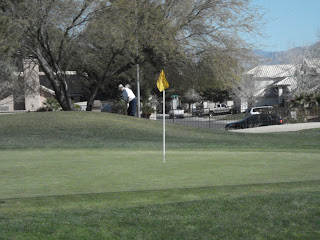
Monday morning (Day of the Tour) I went out and hit balls with the other professional golfers, it was one of the best feelings I've ever had playing golf but still nervous as hell, my wife and daughter was their for support, Dan the tour director said he put me with the best players ( BRET PARKER & MIKE DUHAMEL) We tee off at 9:28 am.
My first tee was not that good cause i was nervous plus have not played the course but i got more relaxed as i got to the 7th hole and feeling more confident in my self which i drop the driver that caused most of the problem (My nervous) and hit my 4 iron instead and drop my score in half.
Playing a course I've never played before, i thought I did pretty good, but next time I'll play the course before the tour. (Lesson learned) but learned allot for the next tour.
The NPGT was a well run golf tour, Thanks to Dan Presta (Nice Guy) who was running the tour.
"It was one of the best experience I've ever had".

Thursday, March 24, 2011
Golf Art
This first cartoon i see a lot of amateur thinking of the same thing on all water hazards and i do really relate as well on some hole, for being Pro i don't thing to much about the water hazard, i think more on the green (Target) then anything else. but anyways.
I like this cartoon and the humour this artist has. (I don't know who this artist is, but I'll find out)



I like this cartoon and the humour this artist has. (I don't know who this artist is, but I'll find out)


Russell Houston is one of my Cowboy/Golf Artist


Friday, March 4, 2011
Different tours through the years.#1
2006 and 2009 (South Mountain G.C. in UT.) Picture Below.
Tour - 2006 was a pretty good tour, weather was good, the wind, everything, got 2nd place (-6)
that was the year i won $5,000


Tour - 2006 was a pretty good tour, weather was good, the wind, everything, got 2nd place (-6)
that was the year i won $5,000

Tour - 2009 The weather was pretty hot that day and wind was at least 15 to 25 mile winds, which i still scored a +3 and got 5th place, my friend took this picture of me and put Golf Digest on it so it looks like the magazine cover, just to be funny

The Players Tour.
Was pretty fun, it was an amateur mini tour in UT (Early 90's to mid 90's), it was ran like a PGA Tour, once a month you travel to different golf courses in UT to play and win stuff and little bit of money$ but not much. below was my bag tag.

Friday, February 25, 2011
Painted Desert Golf Course, Las Vages
End of March is the first pro tournament for me this year, after getting new clubs and fairway woods, I've been hitting quite well, but still waiting for the golf courses to open to practice on course, today 2/25/11 I've had about 3 inches of snow at my house and it supposed to snow to 6 inches by Saturday.
I been getting ready for this tour, since i have not been there, i have been looking up on the internet getting info on the layout to type of grasses etc; the Sunday i'll be there, i'll play it or walk the 18 holes with my wife to find out the slopes of the greens to the yardage of the hazards etc.
This course has narrow fairways and deceptive greens.

I been getting ready for this tour, since i have not been there, i have been looking up on the internet getting info on the layout to type of grasses etc; the Sunday i'll be there, i'll play it or walk the 18 holes with my wife to find out the slopes of the greens to the yardage of the hazards etc.
This course has narrow fairways and deceptive greens.

Tuesday, February 8, 2011
Heated Driving Range
Well it snowed again, about 3 1/2 inch today and cold-20 degrees, thinking to go to the driving range again.
Indoor training is starting to suck, but it looks like it going to get into the 40's this Saturday so i can go chip and putt on the putting range.
The tour is getting closer so I've been training every day, indoor of course, unless i travel out of state which I'm thinking about.
The last time i went to the range was last week, it was around 35 degrees at that time did really well with my new clubs and fairway woods, then it started, the snow then the hail came down, you could not see the ball in flight any more but it was fun.
Every year I wrote down my distance with every club/woods/driver i have, with the 7:30 / 9:00 / 11:30 swings and with the new clubs, it's about the same and alittle more, so I've wrote it down then when i get to the range again I'll write it down for the second time and maybe a third time to make sure on my distance for the first of the year then I'll do it again in the summer and then the fall.
Couple of weeks ago, I had a guy write me back on a golf site (Forum) and wondering what the hell is a heated driving range looks like, kind of funny thou, when I take the picture I'll attach one here as well.

Indoor training is starting to suck, but it looks like it going to get into the 40's this Saturday so i can go chip and putt on the putting range.
The tour is getting closer so I've been training every day, indoor of course, unless i travel out of state which I'm thinking about.
The last time i went to the range was last week, it was around 35 degrees at that time did really well with my new clubs and fairway woods, then it started, the snow then the hail came down, you could not see the ball in flight any more but it was fun.
Every year I wrote down my distance with every club/woods/driver i have, with the 7:30 / 9:00 / 11:30 swings and with the new clubs, it's about the same and alittle more, so I've wrote it down then when i get to the range again I'll write it down for the second time and maybe a third time to make sure on my distance for the first of the year then I'll do it again in the summer and then the fall.
Couple of weeks ago, I had a guy write me back on a golf site (Forum) and wondering what the hell is a heated driving range looks like, kind of funny thou, when I take the picture I'll attach one here as well.

Monday, January 3, 2011
NPGT
I just Registered for the National Professional Golf Tour - http://www.nationalprotour.com/ on 01/01/11 and now my journey begins on the pro tours.
Thursday, December 9, 2010
Pro Tournaments for 2011
I'm waiting on the Schedules for the 2011 NPGT and other Pro tours and getting ready/training and going through the rules and working out to get prepared for this but winter does suck, it snowed about 30" at my house so i have to put up a golf net inside my garage with mirrors (Garage Days) there are heated ranges in Salt Lake that i go to during winter but it's hard to see the ball when showing.
Today - 12/9/10 it has been raining 40+ degrees so the snow is milting faster so hopefully the GC start to open.
Today - 12/9/10 it has been raining 40+ degrees so the snow is milting faster so hopefully the GC start to open.
Wednesday, October 13, 2010
Qoutes i like on Golf
“The best thing about losing games like this is you get to forget about them. But when you WIN – you get to remember those moments FOREVER.”
If my mind can conceive it, and my heart can believe it, I know I can achieve it.
Yesterday I dared to struggle. Today I dare to win.
Clear thoughts produce clear results.
Nothing happens unless first we dream.
There is no scarcity of opportunity to make a living at what you love; there's only a scarcity of resolve to make it happen.
Self control saves you of mistakes, embarrassment and loss.
Concentrated thinking, visualization, faith and taking action make dreams come true.
Keep your dreams alive. Understand to achieve anything requires faith and belief in yourself, vision, hard work, determination, and dedication. Remember all things are possible for those who believe.
”Golf is my profession, I tell jokes to pay for my greens fee.”
The Mind is your greatest weapon.
It’s the greatest club in your bag.
It’s also your Achilles Heel. (A vulnerable spot)
Relax, Trust your swing.
If you keep putting your self in position to win tournaments, you’re going to win a whole bunch of them.
See the target, see the shot, execute.
Once you’re on the tour, the mental part of the game is 85-90 %.
The hardest thing to teach an Amateur is to slow down there swing.
You can’t let it happen; you’ve got to let it happen
Hit the shot you know you can hit, not the one you think you should.
Remember that someone, somewhere, is practicing, and when you meet him he will win.
Golf is not my life; it is a part of my life...an integral part.
"I've spent most of my life golfing - the rest I just squandered"
" It is a bad teacher that does not allow his student to become better than himself."
Golfing, Rhythm and timing are the two things which we all must have, yet no one knows how to teach either.
What other people may find in poetry or art museums, I find in the flight of a good drive.
If my mind can conceive it, and my heart can believe it, I know I can achieve it.
Yesterday I dared to struggle. Today I dare to win.
Clear thoughts produce clear results.
Nothing happens unless first we dream.
There is no scarcity of opportunity to make a living at what you love; there's only a scarcity of resolve to make it happen.
Self control saves you of mistakes, embarrassment and loss.
Concentrated thinking, visualization, faith and taking action make dreams come true.
Keep your dreams alive. Understand to achieve anything requires faith and belief in yourself, vision, hard work, determination, and dedication. Remember all things are possible for those who believe.
”Golf is my profession, I tell jokes to pay for my greens fee.”
The Mind is your greatest weapon.
It’s the greatest club in your bag.
It’s also your Achilles Heel. (A vulnerable spot)
Relax, Trust your swing.
If you keep putting your self in position to win tournaments, you’re going to win a whole bunch of them.
See the target, see the shot, execute.
Once you’re on the tour, the mental part of the game is 85-90 %.
The hardest thing to teach an Amateur is to slow down there swing.
You can’t let it happen; you’ve got to let it happen
Hit the shot you know you can hit, not the one you think you should.
Remember that someone, somewhere, is practicing, and when you meet him he will win.
Golf is not my life; it is a part of my life...an integral part.
"I've spent most of my life golfing - the rest I just squandered"
" It is a bad teacher that does not allow his student to become better than himself."
Golfing, Rhythm and timing are the two things which we all must have, yet no one knows how to teach either.
What other people may find in poetry or art museums, I find in the flight of a good drive.
Prepared for a Competition by Dr. Graham and John Stabler from Golfpsych
There are 7 Keys to Being Well-Prepared for a Competition Besides Good Golf Skills
1. Thought Control
2. Practice Round
3. Game Plan
4. Programming
5. Good Sleep
6. Nutrition and Hydration
7. Pre-Round Warm-Up
1) Thought Control
These 7 Keys will have you ready to play to your ability if you know how to do them well and put in the effort to do them well.
While all of these are done the day of competition or one or two days before, Thought Control needs to start long before the competition.
The tournament schedule has been set and some time before the tournament you have to commit to play in it.
As soon as you make the commitment to play that tournament your analytical mind will start posing questions and imagining scenarios.
What are your thoughts about playing in the tournament? Do you have memories of this event in the past? How does it compare to other competitions you play? How competitive is the field? What are your chances? What are your expectations? How have you been competing recently? How is your game? How much have you been able to practice? Who will be watching? How will your performance effect your future? etc., etc.
All of these questions and more may begin to course through your mind. If any of the answers to these questions are not to your liking or create anxiety, then you will be programming higher arousal and negative expectations.
If the answers to these questions are really positive and exciting, then you will be programming higher arousal and higher expectations.
Which one are you? Maybe some of both?
For some players these questions and answers will be working in the background, seldom recognized, never admitted inwardly or outwardly, perhaps denied.
For others, they just don’t think about it until closer to the event, then these thoughts can come like a tsunami, overwhelming them suddenly a few days before the event.
As you know from my previous emails, arousal kills. Your thoughts long before tournament day can raise your arousal gradually so you don't realize you are already higher than normal. This probably has happened when you just don't feel comfortable over the ball or your tempo is off or something is wrong with your swing or your putting isn't working before the tournament.
Of course when the tournament starts arousal goes even higher and things can get ugly fast.
Awareness of your thoughts about competition and how they affect you is the first step to managing or controlling your thoughts.
Every now and then ask yourself what you were just thinking about. We call these moments Thought Checks. Were there any thoughts about the competition? If so, were they hurtful thoughts, thoughts tied to the competition which raise arousal and create anxiety or raise or lower expectations?
If so, then you must change them. Unfortunately, most of us cannot simply stop thinking those thoughts. “Don’t think about...” doesn’t work very well. Don't think about a pink elephant. What did you just picture?
This is where using your imagination really helps.
Imagine writing that Not-Allowed thought on something...a golf ball...a toy car...an airplane...a plate...the beach...a pelican...anything at all.
Now in your imagination you take the time to write or draw the not-allowed thought on this thing and then you send it away or have it change into something and it is gone. The more elaborate and unusual the action, the better. The more your mind engages in doing this the better it works.
Then choose an Allowed thought. This is any thought that you like to think about and that is calming. Could be anything at all...a vacation...a favorite place...doing something fun...your pet...favorite people...music...a great round or great shot.
There, you have controlled your thoughts, choosing what you will think about instead of letting the thoughts just flow.
Another way to do this is to identify the problem thought and then use that as a “Cue” to think about something specific, something that will help you play on that competition day. It could be how well you are going to do some part of your Mental Routine like Commitment, in that future competitive round.
For Example: Every time you think about “I hope I shoot below...” or “I need to shoot.... to have a chance or win”, say to yourself, "that’s my Cue to think about how committed and how freely I will swing in this tournament". Then imagine how you feel and think while you are over your shots when you have been really committed and swinging freely in the past.
This is programming yourself to be the way you want to be on that competitive day.
There are more ways to Control Your Thoughts before competition, but this should help. I encourage you to raise your awareness of your thoughts and the effects they have on you. Try either of these techniques in the days before for your next competition.
2) Your Practice Round
Are you getting the most you can from your Practice Round before the competition starts?
In some cases you cannot get a practice round before you have to compete. If you get no practice round, then you should try to collect as much information as possible on the course. Get the course map, type of greens and any other information available. The internet can be really helpful.
Generally courses allow practice rounds the day before the tournament. So assuming one practice round the day before the tournament starts, try to do as much of this as possible.
Try to mimic the tournament situation. Can you tee off at the same time of day as your tournament tee time? From the same tees?
Get the weather forecast for the next day, especially wind direction and speed. Make sure you understand where the wind will be coming from on each hole. As you play try to imagine what effect the wind will have on your shots and where this shot would have ended up. Note any features that may affect the wind like a large building or tall trees.
Play every shot with a tournament quality mental routine, trying to hit a specific target and shot. This is not the time to free wheel and play crazy agressive because it doesn't count. See where good quality shots end up. Hit a second confirming shot if you miss the first one a bit.
You can also hit shots to play the hole two different ways.
Do Not Keep Score!!
This is not competition. You are not the same on a practice day as on the competitive day. Your outcomes don't matter and your level of arousal is probably lower.
Time after time, players tell us how well they played the practice round and they establish expectations for competition. Those expectations for performance and comparisons to the practice round then distract, raise arousal and create problems when the competitive round is not the same.
You should be measuring the course as you go, like a good caddie. Use a range finder or step it off. Not all course markings are accurate or measured in the way you expect. If the wind changes, then that shot you hit in practice may not work in competition. Knowing the yardages to all features enables you to judge this better and make adjustments to changing weather.
You need to understand how wide the fairway is at different areas, how far to the fairway bunkers and how far to clear them. How big is the green? Are the yardages to the middle or front of the greens?
Where is the trouble? Can you take it out of play or reduce your chances of hitting it? How far to clear the trouble?
Work the greens. Where are likely pin placements? Are they marked in advance? Putt in those areas to learn the breaks and the speed. Don't worry about the current pin placement, it will be changed. You can also assume that the greens will be mowed and a bit faster the next day.
How much slope and where do you want to be putting from on each green. Sometimes it doesn't matter where the pin is. On small greens you may choose to shoot at the middle of the green.
Determine where you don't want to be if you miss the green. Practice getting up and down from your preferred miss areas.
(Have you done all of this on your home course? Or do you just play the same shots everytime? Do certain holes always play hard? Do they deserve to?)
You are collecting data so that later you can make a written game plan for competition. It is the only purpose of a practice round.
You should not be working on your swing or mechanics. You should not be working on your putting. It is too late to perfect your physical game the day before the tournament. Don't worry about how you are hitting it or rolling it.
May I repeat, You Should Not Be Playing For Score. You should not be gambling.
Gathering this information can be time consuming and tiring. Make sure you are hydrating and eating. Be respectful of the groups behind you. Let them play through if you are slow.
If you are competing on a course you know well, then use your practice round to verify your game plan. You may not hit all the shots, only the ones that you find challenging. Spend most of your time working on the greens.
In this case you may think it is OK to be competing with others and trying to win some money. The downside to this is that you may use too much mental energy before the tournament starts, effectively lengthening the tournament. I recommend saving your energy and competitive spirit for the real competition.
Enough said. I think you get the picture.
3) Your Game Plan
Continuing my series of newsletters on How to Prepare Well for a Competition, this one is about how to develop a good Game Plan for this competitive round.
Do you have a Game Plan? Do you know what clubs, targets and type of shots you want to play for today's round? Or are you making it up as you go?
Are you a professional or amateur? Are you a serious competitor? Do you want to play your best in today's round? Then you better know how you will try to play the course today in detail before you start.
Here are some guideline concepts that you should follow to help you make your game plan.
1. This is your plan based on your abilities and confidence.
2. Choose your strengths as much as possible.
3. Take some risk based on your abilities.
4. There may be some shots you do not have the ability to play.
5. Write it down in detail.
6. Commit to your Game Plan.
7. Review and Modify for Next Round.
1. This is Your Plan! You have to decide on how you want to play the course. Do not let others talk you into choices that you are not comfortable with. Do not let peer pressure push you into shots you are not comfortable with.
Just because others are choosing to play driver on that short par 4 does not mean you should. Just because others think you should play the par 5 as reachable in 2 shots does not mean you should.
Just because the stated par is 4 does not mean you have to be on the green in two shots. For you this may be a par 4.5. You can choose to play it as a par 5 in your mind and in your plan. Some tough par 3's, you may plan to be short of the green and chip up whether because you are between clubs or the green just isn't accepting or holding shots.
When you make the choices, it is much easier for you to Commit to the shot and therefore play it better and more consistently.
2. Choose to play to your strengths as much as possible. What is your favorite approach club and yardage? How many times can you have that in your hand this round? The more times, the better you should play.
Choosing to play closer to the green where you have to play a partial shot or very touchy lob wedge is much more difficult in competition and when the pressure is on. You will do much better by choosing a full shot in these circumstances.
In addition by choosing shots you have a lot of confidence in, your ability to fully commit to that shot and do a good mental routine is enhanced. This increases the probability of good outcomes.
3. Take some risk based on your abilities. Choosing shots that you have lots of confidence in does not mean you cannot be aggressive at times. We have developed a rule for this decision making process. We call it The 50% Rule.
The 50% Rule says: when choosing the club and shot, the choice you make should have at least a 50% probability of success. Another way to say this is, if you hit this shot 10 times, how many of those times would you expect it to come off exactly as you hope or be acceptable? Try to be very honest in this self-assessment. Shots that have less than a 50% probability are very hard to be fully committed to and tend to raise arousal.
Players that measure Dominant on the personality assessment easily choose shots that may only be a one out of ten or even one in a hundred chance of coming off. We call these "Hero Shots". Sure feels good when they work but most of the time they don't. The risk here is too high.
Players that measure Submissive on the personality assessment often choose shots that are very safe, say 8, 9 or 10 out of 10 shots. We ask them to pick a few shots a round where they will play the 50% probablity shot if there is a good reward for doing it. Not all the time.
Under pressure Dominants get more aggressive and Submissives get more defensive, hurting them both.
For the very accomplished player that has every shot with high confidence, you will have find significant differences in your confidence levels with each shot choice. Always go with the highest confidence choice you can without being too careful or defensive.
4. Are there shots you just don't have any confidence in? What about that shot on #17, the island green with no bailout position? What are you going to do when there is not a shot you can play that has at least a 50% probability of success, based on your abilities?
This is called a free play or free roll. Your chance of success is low. The course architect or the greenskeeper was too aggressive. So give it a wack. Swing freely and aggressively. Don't hold back. Don't swing afraid. Plan on missing in your game plan. Expect to miss and be pleasantly surprised if it works out.
But you cannot think about the trouble or the miss in your mental routine when playing the shot. All you see is your ball, well struck, heading for the target in your imagination and during the Visual step of the routine.
Playing the shot while fearful of the outcome will guarantee the miss.
5. Write Your Game Plan in Detail. Every club, every target, every shot shape/type, for every shot, tee to green. What part of the green do you want to be on? Where is the trouble to avoid? How many yards to clear that fairway bunker if that is the plan? How wide is the landing area for this club?
You must assume the weather and conditions you expect to play this round in. How does the anticipated wind affect targets and shot selection.
What if a front is forecast to come through during the round or soon after? Is writing a detailed plan a waste of time?
If this is the situation, make two game plans accomodating the wind from the two different directions.
Is it a waste of time if your tee shot does not go where you planned it? First of all check your mental routine for errors. Then check your calculations that led to that game plan and those choices. Then adjust for the next shot. If your choices were wrong and it wasn't a mental error in your routine, adjust the plan for tomorrow.
You could plan two different approach clubs for this one hole: one if the tee ball stays on the upper plateau and another if it catches the slope and kicks forward for more yardage.
Sometimes the greens are small and aiming for the center of the green is a good plan. Other times there are places on the green you don't want to be, no matter where the pin is. This is all part of your Game Plan.
If you are playing in New England where the weather seems to change every 20 minutes, planning for the dominant weather pattern is still better than no plan. The time you take to think about the course design and your abilities will make it easier to adapt the plan if you need to, especially under the pressure of competition.
6. Commit to Your Game Plan. If it is a good plan for you, this should be calming and enable your performance. If you get behind on score, of where you think you should be, don't change the Game Plan.
There is a reason things are not going as well as you think they should. Most of the time the issues or problems are mental. Don't change Your Game Plan to get more aggressive to make up strokes or to catch another player.
Focus on your Mental Game and doing good Mental Routines. Work on lowering your Arousal level as it is probably too high. As you settle down, Your Game Plan should start working for you.
There are only two times we agree that you should change your Game Plan.
1. When the weather or conditions change.
2. When you are on the Back Nine Final Round, and you know the score for sure, and you have great tempo and confidence, and there are opportunities to pick up some shots by getting more aggressive.
Otherwise stick to your Game Plan. Play it right into the clubhouse. Let the other player stumble coming in.
7. After the round, Review and Modify Your Game Plan, if needed or different weather is forecast. How did it work? Were you confident enough in your choices to swing fully committed? Can you improve the choices in Your Plan in any way? This will help you get ready for your next round.
For practice, do a Game Plan for your home course, from each of the tees that you might play. Most players have never done their home course. They tend to play the course the same way each time. Some holes always play easy and other holes always play hard. Is it the hole or is it your Game Plan? When they play hard, do they play harder or cost you more strokes than they should?
4) Programming Yourself for Performance
Do you program yourself for success or failure before competition?
The average golfer has no programming system for preparing for competition. They entertain any thoughts and conversations that come along.
Their thoughts could be of how they played in this tournament last time, good or bad. They might think about their chances and using logic determine that they have a great chance or no chance based on their skills, recent practice (or the good score in their practice round) and recent competitions, creating expectations. Expectations of Outcome are Not Good.
Before the round, the expectations can raise arousal and make you more concerned with your outcomes. As you play you will constantly consider how things are matching those expectations and react acccordingly. This usually triggers emotions and raises arousal, hurting your play.
Others will talk about how things may go and what you have to do, what score, how many putts, who will be watching, results of winning, etc. They can pull you into outcome thinking and raise expectations or put pressure on you for performance. Reporters are notorious for doing this, as are some parents and other players, caddies and spouses, some coaches too.
If you are unaware of the real impact on your game of these average thoughts and comments and you let yourself entertain them, then you are unlikely to play well in the tournament.
If you spend much thought imagining scenarios where you fail or win, then you are programming yourself with those scenarios and your outcomes will suffer. "But, But I thought you were supposed to picture success?"
Picturing success and imagining what it will be like to accept the trophy and prize money are great for overall motivation, but they cannot go on the course and they are dangerous to performance the night before and on the course because they will raise your arousal and reduce your golf abilities. They will keep you focussed on your outcomes and your chances of winning as you play.
Some players have read or heard mental gurus expound on the following generally accepted concepts and may say to themselves tomorrow or on tournament day "I will play one shot at a time, I will be patient, I will do really good routines, I will manage my emotions", etc. Nice thoughts but unlikely to get you very far.
I am writing this newsletter to break you out of this average thinking and performance purgatory.
You can do a lot better than this before the round and therefore during the round. We call it Programming Champion Thoughts and Attitude.
In the first email in this sequence on preparation for competition, I gave you several Thought Control techniques. You should have been using these to deal with the thoughts of outcome and expectations in the days leading up to the tournament.
Programming: The night before your round, (you could do this every night of the days before the tournament), find some quiet place and time when you will not be interrupted. Shortly before you go to sleep is ideal, but anytime is good. You could do this several times a day.
Sit down in a comfortable position. Laying down is not recommended because you may go to sleep.
Begin breathing slowly, 5 seconds inhale, pause, then 5 seconds exhale. Focus on controlling the air and breathe abdominally. That is, as you inhale your stomach expands. Your chest should not rise. As you exhale, your stomach should move in, your chest should not fall. Modify the speed to go as slow as you can without having to take a catch-up breath. With practice you will be able to go slower and slower. This is great for lowering arousal.
It does not matter whether you breathe through your mouth or nose. We like equal time in and out.
Feel yourself get really relaxed. Facial tension should be the last to go. Everything soft and warm. No tension.
Now recall a round where you played really well, maybe best ever. Remember what it was like on the course. How you were feeling and thinking during the round. This will include things like fun, patient, calm, confident, great focus, peaceful, competitive, great tempo, great touch and feel, good green reading, committed, didn't know score, un-troubled, un-distracted, good visual steps, etc. Really live it in your mind.
Do not include the parts about winning or adding up your score or the applause afterwards when you got your trophy.
Once you are there and feeling these things, imagine tomorrow's round. Imagine yourself on the course feeling and thinking the same way as you did that great day. See yourself playing well, in the moment, patient, etc. Then play some of the shots you will face, according to your game plan.
Imagine doing a full and excellent mental routine including hitting the ball and watching it fly, feeling it through the air, landing and finishing. Do this in real time, not rushed or quickly. It should take the same amount of time to imagine it as to play it for real. Fully engage your mind in doing these steps as vividly as you can. See good results. Feel good ball striking.
If you have been following my sequence of preparation steps, then you have a detailed game plan for this competition. Pick some of the toughest shots you will face tomorrow. Play those and imagine good shots. Enjoy them vividly.
Play from 6 to 10 shots like this. It is not necessary to play every shot, although Jack Nicklaus said he did. We know this is mentally tiring.
This Programming should take 15 to 20 minutes. Longer is OK but not more beneficial. Doing it with full engagement mentally is the key.
If you are distracted or other thoughts keep intruding, then you are not relaxed enough. If you have had caffeine or sugar or other stimulants and they are still affecting you, this will be harder to do.
This is all about emphasizing the mental process of playing and the Champion attitude of focussing on the process and letting go of the outcomes of your shots and your round. Focus on your mental goals for the round and make them the most important thing when you are playing. Your score and your swing are not fully in your control. Your mental game is.
Programming your Champion Mental Attitude the night before will make you much more likely to operate with this attitude in the competition. It is real, effective practice for thinking like a champion.
Now it is up to you to do it.
5) A Good Nights Sleep
Many players have problems sleeping well the night before the first round and the final round. This is usually due to their thoughts about the competition.
If your thoughts about the competition are triggering the release of chemicals in your body, then they are raising arousal and making it more difficult to go to sleep. This heightened arousal may also have you sleeping poorly and waking early. This is the most common source of the problem.
The first thing you must do is to Control Your Thoughts effectively. Our "Regulating Thoughts" technique can help you do this nicely. It is detailed in our Personality Assessment and Report. Any of our GolfPsych Instructors can give you the details of how to do it.
If you are doing the Programming I described in the previous step for preparing to compete, this will help a lot with the anxiety thoughts.
Then there are a number of things that will help you prepare to sleep.
There is a natural rythym to your level of arousal and the hormones in your system. A healthy rested person will experience their highest levels of arousal and hormones in the morning and declining through the day until they reach their lowest levels at night. These lowered levels enable you to go to sleep.
Using stimulants during the day will upset this pattern. The size and timing of meals has a big effect on this pattern. Try to eat your lightest meal at night, several hours before bedtime.
Avoid violent or horror movies and video games that may raise arousal just before bedtime.
A warm glass of milk about an hour before bedtime can be helpful. Eat a high protein snack and a small piece of fruit about 2 hours before bedtime. This will provide L-tryptophan an amino acid and help it get across the blood-brain barrier. Tryptophan helps your body produce melatonin and seratonin in the brain.
Melatonin is secreted in your brain at night and reduces some hormone levels. According to several sources taking a melatonin supplement in the evening can help prepare your body for sleep. We know of several players that have had success with this supplement and use it to aid sleep on planes as well.
Try to maintain a similar schedule each day. Do not try to change your pattern for your tee times, aside from very early tee times that make you get up earlier than normal. Changing your pattern will make your internal clock change and get you off pattern. It may take several days to normalize.
When crossing multiple time zones, it is very important to try to get on local time as quickly as possible. Some of our clients have found that a good workout shortly after arrival, depending on the local time of day, can be very helpful in shrugging off the effects of the long flight and getting their bodies adjusted to local time.
A short time before bedtime, you should be doing things that are relaxing like meditating, journaling, sipping herbal tea, reading relaxing material, talking quietly with a loved one, etc.
Always try to prepare for bed as normal: brushing teeth, washing your face or showering, disrobing, putting on pajamas, etc.
Finally, you are in bed and need to go to sleep. A simple technique to help you go to sleep combines relaxation technique and thought control. Begin slow abdominal breathing. That is inhale slowly, 5 seconds in, filling your stomach. It can help to put a hand on your stomach and feel yourself raising that hand as you inhale.
Then pause for a moment and exhale for 5 seconds, feel your hand lowering as you pull in your stomach to push the air up your throat and out of your body.
Focus on the air and controlling the air movement. Feel it in and out.
On the exhale work on relaxing your body. You can imagine exhaling stressors.
After several good breath cycles, then in sequence focus on relaxing the muscles in your feet, then your lower legs, then your thighs, then your stomach muscles and your lower back. Continue all the way up your body focussing on each section with the exhales. Do not move to the next area until the current area is really relaxed and warm feeling.
At the end you will be left with your facial muscles and your eyes last. Feel the little muscles around your eyes relaxing.
It is most likely that you will float off to sleep before you ever get all the way.
To enhance your sleep quality, it helps to be in a very dark room and have the temperature lower, 70 degrees or below. Light pollution will reduce sleep quality as will noise. Do not sleep with the TV on.
For more ideas on improving your sleep visit Dr. Mercola's article, "33 Secrets to a Good Night's Sleep"
If you are going to think like a Champion in competition and have all the energy you need to finish your rounds and the tournament well, you need good sleep each night!
This should help.
6) Nutrition and Hydration for Competition
Many players will tell us they eat healthy and know what to do to hydrate, but when we ask for details, we are usually disappointed. It is not that you do not want to eat and drink in healthy ways, it is that you don't know what is truly good for you and for competing.
This is not a matter of "Eating your Peas" or "Brussel Sprouts". It is certainly not carbo loading the night before for max energy. Nor is it about avoiding animal fats or "Fast Food".
If you are already tuned into this, forgive me for re-stating what you already know. If you are, you are in the very small minority of the population and of golfers.
First let's start with what you need to be able to perform in competitive golf. It is a very demanding sport primarily because it takes a long time and you have to be sharp mentally the whole time to do your best.
Studies have determined that a player walking and carrying their bag, who weighs 160 pounds, will burn 2,000 calories in one 18 hole round. (Somebody should market golf as the greatest weight loss program ever.) If you weigh more you will burn more. Most people in the world get just 2,000 calories for 24 hours.
The first symptom of low on calories is difficulty focussing and concentrating.
This means that it is very important that you eat before the round, what you eat, what you ate the night before and you need to eat on the golf course.
Your food choices must also support your optimum levels of arousal for golf. Any food that boosts your blood sugar rapidly is also raising your level of arousal rapidly and keeping it too high for golf, no matter how hard you try to lower it.
The major food culprits in raising blood sugar too fast are simple processed carbohydrates: sugar in any form, white bread, cereal, pasta, bagels, fruit juice, sodas, etc. Start reading the labels. Many foods have high fructose corn syrup hidden inside. This is the most unhealthy sugar you can eat and it is in everything because it is cheap.
The other side of this arousal boosting from simple carbohydrates is that once used up, your body does not transition well. This means you will bonk, that is feel tired, sluggish and hungry when they are used up. Not good for focus and concentration either.
GATORADE is not good food because it is full of high fructose corn syrup. G2 has half the levels but that is still too high for golf. High fructose corn syrup is not good for you in any amount.
To get maximum energy without boosting arousal for golf you need a combination of foods in this ratio. 1 Protein + 1 Carbohydrate +1/2 Fat.
This will give you a slow burn or long-lasting source of energy.
The optimum proteins come from the most organic and naturally fed animals, fish and beans you can get. Wild game is great.
Optimum complex carbohydrates come from any fruit or vegetable that is organically grown and still a whole food, not processed, as close to the farm as possible.
Optimum fats come from those same organically raised animals and fish. They also come from avocadoes, olive oil and nuts.
These foods produced these ways will give you optimum nutrition and health.
Most of us cannot get this quality of food all the time. Do the best you can in the situation. Even in fast food restaurants, you can get a balanced meal.
There are some super foods that make this balance easier to achieve. Whole dairy products have all three food groups. Whole eggs cover all the bases. Nuts actually have all three too.
Do not avoid fats. They offer the most energy per gram and take time for your body to release it. You need saturated and un-saturated fats. Please avoid hydrogenated fats like margarine which are very unhealthy.
Please take food to eat on the golf course. Don't wait until you are hungry to eat. If you are not hungry until you finish and then you are ravenous a short while later, you have been too tense while playing which kills appetite.
Good choices for the course include nuts, trail mix (read the label), jerky (read the label), whole fruits like bananas and apples and some nutrition bars. We recommend Lara Bars and Cliff Bars. They do contain nuts so may not work for you if you are allergic. Please read the labels on any other bars because they are probably full of sugar.
To judge how much sugar, a teaspoon holds 4 grams of sugar. How many teaspoons of sugar are in that food?
Hydration
The first symptom of moderate de-hydration is difficulty focussing and concentrating.
Unfortunately the rate of re-hydration into your body's cells is very slow, only 4 ounces per hour. This means that no matter what you do, you will be low by the end of the round.
This means that before you start your cells need to be full up. Alcohol, diuretics and caffeine cause your body to lose water. Not a good idea before the round or even the night before.
If your body is low on electrolytes this slow rate of re-hydration is even slower. Through blood tests we found that all of our Tour clients tested were de-hydrated. This was because they were not actively replacing the electrolytes they were losing through perspiration and other ways. You are probably low in electrolytes too.
If you want to know exactly we can organize a blood analysis for you. Please contact me for the details and directions.
There are five primary and important electrolytes: calcium, magnesium, potassium, sodium and chloride. You need them all. Sodium chloride is table salt. So salting your food is OK as long as you drink plenty of water.
2 1/2 servings of Gatorade have less than the potassium in one banana. This is not a good way to get your electrolytes for golf. It only has two electrolytes and way too much sugar for golf and health.
Trace Minerals has a line of electrolytes that are the best we have found. Many health food stores carry them and others. Emergen-C is not a good choice because they have added too much sugar.
With Trace Minerals we recommend one packet in water before the round and one packet during the round along with plenty of water. They come in 6 flavors and have lots of other vitamins and minerals included.
Make a water plan for the round. Try to drink often and before you are thirsty.You might plan to empty and fill your water bottle twice or three times during the round or more. You may drink more when it is hot, but don't skip it because the weather is cool. You need it then too.
Don't under-estimate the need for both enough calories and water. Many golfers finish their rounds poorly because one or both are low. They are one of the things we look for when players tell us they finish poorly or play poorly after the turn.
Hope this helps.
Let me know how it goes.
Unfortunately because I am making recommendations, based on our experience and the research of others, of things that you will ingest, you must be aware that I am not a licensed health care professional or licensed nutritionist. Please do the research yourself and come to your own conclusions. I believe these conclusions are sound and follow them myself. Your results may be different. You are responsible for what you put in your body. I cannot be responsible for your results or adverse or allergic reactions. Please consult your physician or a nutrionist for their advice and make your own decisions.
7) Your Pre-Round Warm-up!
The Seventh and Last Step in your pre-round preparation for a competitive round, the Warm-Up.
Quite often players develop a pre-round warm-up that they consider necessary for them to play well. Often it requires a certain amount of time and sequence to make you feel that you are ready to play. Less than that and you may feel un-prepared and have negative expectations.
How do your rounds start? How do you feel at the beginning of the round?
If your rounds typically start rough or poorly or you are very wound up, high on the arousal scale, then your pre-round warm-up is not effective.
The only objective of the pre-round warm-up is to have you ready to play. You may have some butterflies, but you should feel pretty good with good tempo and great focus.
Here are the guidelines we know to be most effective. Exactly how you do them is up to you.
1. You do not want to feel rushed in anyway. The morning of the competitive round you should have a plan for waking, dressing, eating, and getting to the course that has plenty of time in it. You need to have extra time to allow for problems, like spilling your breakfast and having to change, like a flat tire or traffic on the way, a dead battery, etc.
2. When you get to the course, park the car and then sit for a moment, breath and relax before you get out. Imagine how the day will be and adopt your Champion Attitude. Then get out of the car, get your gear and head for the practice areas. No rushing.
3. It is your choice which sequence of areas you go to: range then short game areas or short game areas then range. It doesn't matter.
4. The main objective is to warm up your mental routine and get into playing rhythm, not hit great shots or putts and definitely not to work on your swing or stroke.
5. On the range: stretch and loosen up, then choose an easy club and hit 3/4 shots. Do this until you have good tempo and rhythm and feel for the shots. Then play shots with a full mental routine just like you will on the course. Each shot is different. Don't replay the shot if you miss. Don't be too concerned with your swing or where the shots go. The most important thing is to get your mental routine working well and good tempo. You will only need to hit 12 -15 shots like this.
You may want to play the first 3-4 holes on the range. Imagine the hole and shot from your game plan. Choose the club and commit, then see it and feel it and play it just like you were on the course. Judge where the ball went and what the next shot would be. Then do a good routine and play that shot. Get into playing rhythm.
Don't play shots over. That is range mode. You do not get to do that on the course.
6. On the green: Start with one or several balls, 3 is popular. Roll the balls up hill, down hill, cross the slope, long and short. Try to roll to spots not holes at first. Try to get the ball to stop on the spot. This will give you full feedback on the speed and break and grain of the green.
When you feel you understand the green and have good feel for the speed and break, then roll one ball for real. That is do a full mental routine just like you will do on the course. You may even mark the ball and take care in lining it up, if that is what you do in competition. Do your routine and roll the ball. If it is not a tap-in, then it gets a full mental routine again. Do not repeat any putts, you don't get to do that on the course.
You are trying to get into play mode mentally. Don't worry about whether the putts are dropping. Is your mental routine working? Are you able to block others out and focus on the putts? Can you feel the speed? Can you imagine the ball rolling across the green and going in the hole? If not, you are probably over-aroused. Work to calm and simplify your mind with simple breathing sequences. You could even put a single breathing sequence into your routine after commitment and/or over the ball.
7. Move to the first tee calmly. Stroll. Make sure you have time to get there and relax.
8. On the first tee, breath, relax and review your mental goals for the round. Think about your target and the game plan for the first shot. Confirm your choices and commit to them. Do a really good mental routine and let it fly. No holding back, no guiding, no careful swings. Trust it and swing fully.
9. If the first shot or couple shots are not your best, DON'T PANIC. You are probably a bit over-aroused. Breath, walk slowly, think about your mental goals and doing good routines. Don't anticipate the score. Don't extend your play to the end. Don' put pressure on yourself to get the shots back right away. You understand that as you settle down your skills will improve. Don't try to fix your swing.
10. Stay committed to your Game Plan and the process. Let the score and outcome take care of itself.
This process should have you ready or more ready to play to your ability from the beginning. If you still struggle, then we need to identify the sources and develop a strategy to solve this problem.
We are here for you. Don't be bashful about asking for assistance. You don't want to waste any more rounds starting poorly.
http://www.golfpsych.com/
I read the book the Eight Traits of a Champion Golfer by Dr. Graham and John Stabler from Golfpsych, it's a must book to read on mental skills training
1. Thought Control
2. Practice Round
3. Game Plan
4. Programming
5. Good Sleep
6. Nutrition and Hydration
7. Pre-Round Warm-Up
1) Thought Control
These 7 Keys will have you ready to play to your ability if you know how to do them well and put in the effort to do them well.
While all of these are done the day of competition or one or two days before, Thought Control needs to start long before the competition.
The tournament schedule has been set and some time before the tournament you have to commit to play in it.
As soon as you make the commitment to play that tournament your analytical mind will start posing questions and imagining scenarios.
What are your thoughts about playing in the tournament? Do you have memories of this event in the past? How does it compare to other competitions you play? How competitive is the field? What are your chances? What are your expectations? How have you been competing recently? How is your game? How much have you been able to practice? Who will be watching? How will your performance effect your future? etc., etc.
All of these questions and more may begin to course through your mind. If any of the answers to these questions are not to your liking or create anxiety, then you will be programming higher arousal and negative expectations.
If the answers to these questions are really positive and exciting, then you will be programming higher arousal and higher expectations.
Which one are you? Maybe some of both?
For some players these questions and answers will be working in the background, seldom recognized, never admitted inwardly or outwardly, perhaps denied.
For others, they just don’t think about it until closer to the event, then these thoughts can come like a tsunami, overwhelming them suddenly a few days before the event.
As you know from my previous emails, arousal kills. Your thoughts long before tournament day can raise your arousal gradually so you don't realize you are already higher than normal. This probably has happened when you just don't feel comfortable over the ball or your tempo is off or something is wrong with your swing or your putting isn't working before the tournament.
Of course when the tournament starts arousal goes even higher and things can get ugly fast.
Awareness of your thoughts about competition and how they affect you is the first step to managing or controlling your thoughts.
Every now and then ask yourself what you were just thinking about. We call these moments Thought Checks. Were there any thoughts about the competition? If so, were they hurtful thoughts, thoughts tied to the competition which raise arousal and create anxiety or raise or lower expectations?
If so, then you must change them. Unfortunately, most of us cannot simply stop thinking those thoughts. “Don’t think about...” doesn’t work very well. Don't think about a pink elephant. What did you just picture?
This is where using your imagination really helps.
Imagine writing that Not-Allowed thought on something...a golf ball...a toy car...an airplane...a plate...the beach...a pelican...anything at all.
Now in your imagination you take the time to write or draw the not-allowed thought on this thing and then you send it away or have it change into something and it is gone. The more elaborate and unusual the action, the better. The more your mind engages in doing this the better it works.
Then choose an Allowed thought. This is any thought that you like to think about and that is calming. Could be anything at all...a vacation...a favorite place...doing something fun...your pet...favorite people...music...a great round or great shot.
There, you have controlled your thoughts, choosing what you will think about instead of letting the thoughts just flow.
Another way to do this is to identify the problem thought and then use that as a “Cue” to think about something specific, something that will help you play on that competition day. It could be how well you are going to do some part of your Mental Routine like Commitment, in that future competitive round.
For Example: Every time you think about “I hope I shoot below...” or “I need to shoot.... to have a chance or win”, say to yourself, "that’s my Cue to think about how committed and how freely I will swing in this tournament". Then imagine how you feel and think while you are over your shots when you have been really committed and swinging freely in the past.
This is programming yourself to be the way you want to be on that competitive day.
There are more ways to Control Your Thoughts before competition, but this should help. I encourage you to raise your awareness of your thoughts and the effects they have on you. Try either of these techniques in the days before for your next competition.
2) Your Practice Round
Are you getting the most you can from your Practice Round before the competition starts?
In some cases you cannot get a practice round before you have to compete. If you get no practice round, then you should try to collect as much information as possible on the course. Get the course map, type of greens and any other information available. The internet can be really helpful.
Generally courses allow practice rounds the day before the tournament. So assuming one practice round the day before the tournament starts, try to do as much of this as possible.
Try to mimic the tournament situation. Can you tee off at the same time of day as your tournament tee time? From the same tees?
Get the weather forecast for the next day, especially wind direction and speed. Make sure you understand where the wind will be coming from on each hole. As you play try to imagine what effect the wind will have on your shots and where this shot would have ended up. Note any features that may affect the wind like a large building or tall trees.
Play every shot with a tournament quality mental routine, trying to hit a specific target and shot. This is not the time to free wheel and play crazy agressive because it doesn't count. See where good quality shots end up. Hit a second confirming shot if you miss the first one a bit.
You can also hit shots to play the hole two different ways.
Do Not Keep Score!!
This is not competition. You are not the same on a practice day as on the competitive day. Your outcomes don't matter and your level of arousal is probably lower.
Time after time, players tell us how well they played the practice round and they establish expectations for competition. Those expectations for performance and comparisons to the practice round then distract, raise arousal and create problems when the competitive round is not the same.
You should be measuring the course as you go, like a good caddie. Use a range finder or step it off. Not all course markings are accurate or measured in the way you expect. If the wind changes, then that shot you hit in practice may not work in competition. Knowing the yardages to all features enables you to judge this better and make adjustments to changing weather.
You need to understand how wide the fairway is at different areas, how far to the fairway bunkers and how far to clear them. How big is the green? Are the yardages to the middle or front of the greens?
Where is the trouble? Can you take it out of play or reduce your chances of hitting it? How far to clear the trouble?
Work the greens. Where are likely pin placements? Are they marked in advance? Putt in those areas to learn the breaks and the speed. Don't worry about the current pin placement, it will be changed. You can also assume that the greens will be mowed and a bit faster the next day.
How much slope and where do you want to be putting from on each green. Sometimes it doesn't matter where the pin is. On small greens you may choose to shoot at the middle of the green.
Determine where you don't want to be if you miss the green. Practice getting up and down from your preferred miss areas.
(Have you done all of this on your home course? Or do you just play the same shots everytime? Do certain holes always play hard? Do they deserve to?)
You are collecting data so that later you can make a written game plan for competition. It is the only purpose of a practice round.
You should not be working on your swing or mechanics. You should not be working on your putting. It is too late to perfect your physical game the day before the tournament. Don't worry about how you are hitting it or rolling it.
May I repeat, You Should Not Be Playing For Score. You should not be gambling.
Gathering this information can be time consuming and tiring. Make sure you are hydrating and eating. Be respectful of the groups behind you. Let them play through if you are slow.
If you are competing on a course you know well, then use your practice round to verify your game plan. You may not hit all the shots, only the ones that you find challenging. Spend most of your time working on the greens.
In this case you may think it is OK to be competing with others and trying to win some money. The downside to this is that you may use too much mental energy before the tournament starts, effectively lengthening the tournament. I recommend saving your energy and competitive spirit for the real competition.
Enough said. I think you get the picture.
3) Your Game Plan
Continuing my series of newsletters on How to Prepare Well for a Competition, this one is about how to develop a good Game Plan for this competitive round.
Do you have a Game Plan? Do you know what clubs, targets and type of shots you want to play for today's round? Or are you making it up as you go?
Are you a professional or amateur? Are you a serious competitor? Do you want to play your best in today's round? Then you better know how you will try to play the course today in detail before you start.
Here are some guideline concepts that you should follow to help you make your game plan.
1. This is your plan based on your abilities and confidence.
2. Choose your strengths as much as possible.
3. Take some risk based on your abilities.
4. There may be some shots you do not have the ability to play.
5. Write it down in detail.
6. Commit to your Game Plan.
7. Review and Modify for Next Round.
1. This is Your Plan! You have to decide on how you want to play the course. Do not let others talk you into choices that you are not comfortable with. Do not let peer pressure push you into shots you are not comfortable with.
Just because others are choosing to play driver on that short par 4 does not mean you should. Just because others think you should play the par 5 as reachable in 2 shots does not mean you should.
Just because the stated par is 4 does not mean you have to be on the green in two shots. For you this may be a par 4.5. You can choose to play it as a par 5 in your mind and in your plan. Some tough par 3's, you may plan to be short of the green and chip up whether because you are between clubs or the green just isn't accepting or holding shots.
When you make the choices, it is much easier for you to Commit to the shot and therefore play it better and more consistently.
2. Choose to play to your strengths as much as possible. What is your favorite approach club and yardage? How many times can you have that in your hand this round? The more times, the better you should play.
Choosing to play closer to the green where you have to play a partial shot or very touchy lob wedge is much more difficult in competition and when the pressure is on. You will do much better by choosing a full shot in these circumstances.
In addition by choosing shots you have a lot of confidence in, your ability to fully commit to that shot and do a good mental routine is enhanced. This increases the probability of good outcomes.
3. Take some risk based on your abilities. Choosing shots that you have lots of confidence in does not mean you cannot be aggressive at times. We have developed a rule for this decision making process. We call it The 50% Rule.
The 50% Rule says: when choosing the club and shot, the choice you make should have at least a 50% probability of success. Another way to say this is, if you hit this shot 10 times, how many of those times would you expect it to come off exactly as you hope or be acceptable? Try to be very honest in this self-assessment. Shots that have less than a 50% probability are very hard to be fully committed to and tend to raise arousal.
Players that measure Dominant on the personality assessment easily choose shots that may only be a one out of ten or even one in a hundred chance of coming off. We call these "Hero Shots". Sure feels good when they work but most of the time they don't. The risk here is too high.
Players that measure Submissive on the personality assessment often choose shots that are very safe, say 8, 9 or 10 out of 10 shots. We ask them to pick a few shots a round where they will play the 50% probablity shot if there is a good reward for doing it. Not all the time.
Under pressure Dominants get more aggressive and Submissives get more defensive, hurting them both.
For the very accomplished player that has every shot with high confidence, you will have find significant differences in your confidence levels with each shot choice. Always go with the highest confidence choice you can without being too careful or defensive.
4. Are there shots you just don't have any confidence in? What about that shot on #17, the island green with no bailout position? What are you going to do when there is not a shot you can play that has at least a 50% probability of success, based on your abilities?
This is called a free play or free roll. Your chance of success is low. The course architect or the greenskeeper was too aggressive. So give it a wack. Swing freely and aggressively. Don't hold back. Don't swing afraid. Plan on missing in your game plan. Expect to miss and be pleasantly surprised if it works out.
But you cannot think about the trouble or the miss in your mental routine when playing the shot. All you see is your ball, well struck, heading for the target in your imagination and during the Visual step of the routine.
Playing the shot while fearful of the outcome will guarantee the miss.
5. Write Your Game Plan in Detail. Every club, every target, every shot shape/type, for every shot, tee to green. What part of the green do you want to be on? Where is the trouble to avoid? How many yards to clear that fairway bunker if that is the plan? How wide is the landing area for this club?
You must assume the weather and conditions you expect to play this round in. How does the anticipated wind affect targets and shot selection.
What if a front is forecast to come through during the round or soon after? Is writing a detailed plan a waste of time?
If this is the situation, make two game plans accomodating the wind from the two different directions.
Is it a waste of time if your tee shot does not go where you planned it? First of all check your mental routine for errors. Then check your calculations that led to that game plan and those choices. Then adjust for the next shot. If your choices were wrong and it wasn't a mental error in your routine, adjust the plan for tomorrow.
You could plan two different approach clubs for this one hole: one if the tee ball stays on the upper plateau and another if it catches the slope and kicks forward for more yardage.
Sometimes the greens are small and aiming for the center of the green is a good plan. Other times there are places on the green you don't want to be, no matter where the pin is. This is all part of your Game Plan.
If you are playing in New England where the weather seems to change every 20 minutes, planning for the dominant weather pattern is still better than no plan. The time you take to think about the course design and your abilities will make it easier to adapt the plan if you need to, especially under the pressure of competition.
6. Commit to Your Game Plan. If it is a good plan for you, this should be calming and enable your performance. If you get behind on score, of where you think you should be, don't change the Game Plan.
There is a reason things are not going as well as you think they should. Most of the time the issues or problems are mental. Don't change Your Game Plan to get more aggressive to make up strokes or to catch another player.
Focus on your Mental Game and doing good Mental Routines. Work on lowering your Arousal level as it is probably too high. As you settle down, Your Game Plan should start working for you.
There are only two times we agree that you should change your Game Plan.
1. When the weather or conditions change.
2. When you are on the Back Nine Final Round, and you know the score for sure, and you have great tempo and confidence, and there are opportunities to pick up some shots by getting more aggressive.
Otherwise stick to your Game Plan. Play it right into the clubhouse. Let the other player stumble coming in.
7. After the round, Review and Modify Your Game Plan, if needed or different weather is forecast. How did it work? Were you confident enough in your choices to swing fully committed? Can you improve the choices in Your Plan in any way? This will help you get ready for your next round.
For practice, do a Game Plan for your home course, from each of the tees that you might play. Most players have never done their home course. They tend to play the course the same way each time. Some holes always play easy and other holes always play hard. Is it the hole or is it your Game Plan? When they play hard, do they play harder or cost you more strokes than they should?
4) Programming Yourself for Performance
Do you program yourself for success or failure before competition?
The average golfer has no programming system for preparing for competition. They entertain any thoughts and conversations that come along.
Their thoughts could be of how they played in this tournament last time, good or bad. They might think about their chances and using logic determine that they have a great chance or no chance based on their skills, recent practice (or the good score in their practice round) and recent competitions, creating expectations. Expectations of Outcome are Not Good.
Before the round, the expectations can raise arousal and make you more concerned with your outcomes. As you play you will constantly consider how things are matching those expectations and react acccordingly. This usually triggers emotions and raises arousal, hurting your play.
Others will talk about how things may go and what you have to do, what score, how many putts, who will be watching, results of winning, etc. They can pull you into outcome thinking and raise expectations or put pressure on you for performance. Reporters are notorious for doing this, as are some parents and other players, caddies and spouses, some coaches too.
If you are unaware of the real impact on your game of these average thoughts and comments and you let yourself entertain them, then you are unlikely to play well in the tournament.
If you spend much thought imagining scenarios where you fail or win, then you are programming yourself with those scenarios and your outcomes will suffer. "But, But I thought you were supposed to picture success?"
Picturing success and imagining what it will be like to accept the trophy and prize money are great for overall motivation, but they cannot go on the course and they are dangerous to performance the night before and on the course because they will raise your arousal and reduce your golf abilities. They will keep you focussed on your outcomes and your chances of winning as you play.
Some players have read or heard mental gurus expound on the following generally accepted concepts and may say to themselves tomorrow or on tournament day "I will play one shot at a time, I will be patient, I will do really good routines, I will manage my emotions", etc. Nice thoughts but unlikely to get you very far.
I am writing this newsletter to break you out of this average thinking and performance purgatory.
You can do a lot better than this before the round and therefore during the round. We call it Programming Champion Thoughts and Attitude.
In the first email in this sequence on preparation for competition, I gave you several Thought Control techniques. You should have been using these to deal with the thoughts of outcome and expectations in the days leading up to the tournament.
Programming: The night before your round, (you could do this every night of the days before the tournament), find some quiet place and time when you will not be interrupted. Shortly before you go to sleep is ideal, but anytime is good. You could do this several times a day.
Sit down in a comfortable position. Laying down is not recommended because you may go to sleep.
Begin breathing slowly, 5 seconds inhale, pause, then 5 seconds exhale. Focus on controlling the air and breathe abdominally. That is, as you inhale your stomach expands. Your chest should not rise. As you exhale, your stomach should move in, your chest should not fall. Modify the speed to go as slow as you can without having to take a catch-up breath. With practice you will be able to go slower and slower. This is great for lowering arousal.
It does not matter whether you breathe through your mouth or nose. We like equal time in and out.
Feel yourself get really relaxed. Facial tension should be the last to go. Everything soft and warm. No tension.
Now recall a round where you played really well, maybe best ever. Remember what it was like on the course. How you were feeling and thinking during the round. This will include things like fun, patient, calm, confident, great focus, peaceful, competitive, great tempo, great touch and feel, good green reading, committed, didn't know score, un-troubled, un-distracted, good visual steps, etc. Really live it in your mind.
Do not include the parts about winning or adding up your score or the applause afterwards when you got your trophy.
Once you are there and feeling these things, imagine tomorrow's round. Imagine yourself on the course feeling and thinking the same way as you did that great day. See yourself playing well, in the moment, patient, etc. Then play some of the shots you will face, according to your game plan.
Imagine doing a full and excellent mental routine including hitting the ball and watching it fly, feeling it through the air, landing and finishing. Do this in real time, not rushed or quickly. It should take the same amount of time to imagine it as to play it for real. Fully engage your mind in doing these steps as vividly as you can. See good results. Feel good ball striking.
If you have been following my sequence of preparation steps, then you have a detailed game plan for this competition. Pick some of the toughest shots you will face tomorrow. Play those and imagine good shots. Enjoy them vividly.
Play from 6 to 10 shots like this. It is not necessary to play every shot, although Jack Nicklaus said he did. We know this is mentally tiring.
This Programming should take 15 to 20 minutes. Longer is OK but not more beneficial. Doing it with full engagement mentally is the key.
If you are distracted or other thoughts keep intruding, then you are not relaxed enough. If you have had caffeine or sugar or other stimulants and they are still affecting you, this will be harder to do.
This is all about emphasizing the mental process of playing and the Champion attitude of focussing on the process and letting go of the outcomes of your shots and your round. Focus on your mental goals for the round and make them the most important thing when you are playing. Your score and your swing are not fully in your control. Your mental game is.
Programming your Champion Mental Attitude the night before will make you much more likely to operate with this attitude in the competition. It is real, effective practice for thinking like a champion.
Now it is up to you to do it.
5) A Good Nights Sleep
Many players have problems sleeping well the night before the first round and the final round. This is usually due to their thoughts about the competition.
If your thoughts about the competition are triggering the release of chemicals in your body, then they are raising arousal and making it more difficult to go to sleep. This heightened arousal may also have you sleeping poorly and waking early. This is the most common source of the problem.
The first thing you must do is to Control Your Thoughts effectively. Our "Regulating Thoughts" technique can help you do this nicely. It is detailed in our Personality Assessment and Report. Any of our GolfPsych Instructors can give you the details of how to do it.
If you are doing the Programming I described in the previous step for preparing to compete, this will help a lot with the anxiety thoughts.
Then there are a number of things that will help you prepare to sleep.
There is a natural rythym to your level of arousal and the hormones in your system. A healthy rested person will experience their highest levels of arousal and hormones in the morning and declining through the day until they reach their lowest levels at night. These lowered levels enable you to go to sleep.
Using stimulants during the day will upset this pattern. The size and timing of meals has a big effect on this pattern. Try to eat your lightest meal at night, several hours before bedtime.
Avoid violent or horror movies and video games that may raise arousal just before bedtime.
A warm glass of milk about an hour before bedtime can be helpful. Eat a high protein snack and a small piece of fruit about 2 hours before bedtime. This will provide L-tryptophan an amino acid and help it get across the blood-brain barrier. Tryptophan helps your body produce melatonin and seratonin in the brain.
Melatonin is secreted in your brain at night and reduces some hormone levels. According to several sources taking a melatonin supplement in the evening can help prepare your body for sleep. We know of several players that have had success with this supplement and use it to aid sleep on planes as well.
Try to maintain a similar schedule each day. Do not try to change your pattern for your tee times, aside from very early tee times that make you get up earlier than normal. Changing your pattern will make your internal clock change and get you off pattern. It may take several days to normalize.
When crossing multiple time zones, it is very important to try to get on local time as quickly as possible. Some of our clients have found that a good workout shortly after arrival, depending on the local time of day, can be very helpful in shrugging off the effects of the long flight and getting their bodies adjusted to local time.
A short time before bedtime, you should be doing things that are relaxing like meditating, journaling, sipping herbal tea, reading relaxing material, talking quietly with a loved one, etc.
Always try to prepare for bed as normal: brushing teeth, washing your face or showering, disrobing, putting on pajamas, etc.
Finally, you are in bed and need to go to sleep. A simple technique to help you go to sleep combines relaxation technique and thought control. Begin slow abdominal breathing. That is inhale slowly, 5 seconds in, filling your stomach. It can help to put a hand on your stomach and feel yourself raising that hand as you inhale.
Then pause for a moment and exhale for 5 seconds, feel your hand lowering as you pull in your stomach to push the air up your throat and out of your body.
Focus on the air and controlling the air movement. Feel it in and out.
On the exhale work on relaxing your body. You can imagine exhaling stressors.
After several good breath cycles, then in sequence focus on relaxing the muscles in your feet, then your lower legs, then your thighs, then your stomach muscles and your lower back. Continue all the way up your body focussing on each section with the exhales. Do not move to the next area until the current area is really relaxed and warm feeling.
At the end you will be left with your facial muscles and your eyes last. Feel the little muscles around your eyes relaxing.
It is most likely that you will float off to sleep before you ever get all the way.
To enhance your sleep quality, it helps to be in a very dark room and have the temperature lower, 70 degrees or below. Light pollution will reduce sleep quality as will noise. Do not sleep with the TV on.
For more ideas on improving your sleep visit Dr. Mercola's article, "33 Secrets to a Good Night's Sleep"
If you are going to think like a Champion in competition and have all the energy you need to finish your rounds and the tournament well, you need good sleep each night!
This should help.
6) Nutrition and Hydration for Competition
Many players will tell us they eat healthy and know what to do to hydrate, but when we ask for details, we are usually disappointed. It is not that you do not want to eat and drink in healthy ways, it is that you don't know what is truly good for you and for competing.
This is not a matter of "Eating your Peas" or "Brussel Sprouts". It is certainly not carbo loading the night before for max energy. Nor is it about avoiding animal fats or "Fast Food".
If you are already tuned into this, forgive me for re-stating what you already know. If you are, you are in the very small minority of the population and of golfers.
First let's start with what you need to be able to perform in competitive golf. It is a very demanding sport primarily because it takes a long time and you have to be sharp mentally the whole time to do your best.
Studies have determined that a player walking and carrying their bag, who weighs 160 pounds, will burn 2,000 calories in one 18 hole round. (Somebody should market golf as the greatest weight loss program ever.) If you weigh more you will burn more. Most people in the world get just 2,000 calories for 24 hours.
The first symptom of low on calories is difficulty focussing and concentrating.
This means that it is very important that you eat before the round, what you eat, what you ate the night before and you need to eat on the golf course.
Your food choices must also support your optimum levels of arousal for golf. Any food that boosts your blood sugar rapidly is also raising your level of arousal rapidly and keeping it too high for golf, no matter how hard you try to lower it.
The major food culprits in raising blood sugar too fast are simple processed carbohydrates: sugar in any form, white bread, cereal, pasta, bagels, fruit juice, sodas, etc. Start reading the labels. Many foods have high fructose corn syrup hidden inside. This is the most unhealthy sugar you can eat and it is in everything because it is cheap.
The other side of this arousal boosting from simple carbohydrates is that once used up, your body does not transition well. This means you will bonk, that is feel tired, sluggish and hungry when they are used up. Not good for focus and concentration either.
GATORADE is not good food because it is full of high fructose corn syrup. G2 has half the levels but that is still too high for golf. High fructose corn syrup is not good for you in any amount.
To get maximum energy without boosting arousal for golf you need a combination of foods in this ratio. 1 Protein + 1 Carbohydrate +1/2 Fat.
This will give you a slow burn or long-lasting source of energy.
The optimum proteins come from the most organic and naturally fed animals, fish and beans you can get. Wild game is great.
Optimum complex carbohydrates come from any fruit or vegetable that is organically grown and still a whole food, not processed, as close to the farm as possible.
Optimum fats come from those same organically raised animals and fish. They also come from avocadoes, olive oil and nuts.
These foods produced these ways will give you optimum nutrition and health.
Most of us cannot get this quality of food all the time. Do the best you can in the situation. Even in fast food restaurants, you can get a balanced meal.
There are some super foods that make this balance easier to achieve. Whole dairy products have all three food groups. Whole eggs cover all the bases. Nuts actually have all three too.
Do not avoid fats. They offer the most energy per gram and take time for your body to release it. You need saturated and un-saturated fats. Please avoid hydrogenated fats like margarine which are very unhealthy.
Please take food to eat on the golf course. Don't wait until you are hungry to eat. If you are not hungry until you finish and then you are ravenous a short while later, you have been too tense while playing which kills appetite.
Good choices for the course include nuts, trail mix (read the label), jerky (read the label), whole fruits like bananas and apples and some nutrition bars. We recommend Lara Bars and Cliff Bars. They do contain nuts so may not work for you if you are allergic. Please read the labels on any other bars because they are probably full of sugar.
To judge how much sugar, a teaspoon holds 4 grams of sugar. How many teaspoons of sugar are in that food?
Hydration
The first symptom of moderate de-hydration is difficulty focussing and concentrating.
Unfortunately the rate of re-hydration into your body's cells is very slow, only 4 ounces per hour. This means that no matter what you do, you will be low by the end of the round.
This means that before you start your cells need to be full up. Alcohol, diuretics and caffeine cause your body to lose water. Not a good idea before the round or even the night before.
If your body is low on electrolytes this slow rate of re-hydration is even slower. Through blood tests we found that all of our Tour clients tested were de-hydrated. This was because they were not actively replacing the electrolytes they were losing through perspiration and other ways. You are probably low in electrolytes too.
If you want to know exactly we can organize a blood analysis for you. Please contact me for the details and directions.
There are five primary and important electrolytes: calcium, magnesium, potassium, sodium and chloride. You need them all. Sodium chloride is table salt. So salting your food is OK as long as you drink plenty of water.
2 1/2 servings of Gatorade have less than the potassium in one banana. This is not a good way to get your electrolytes for golf. It only has two electrolytes and way too much sugar for golf and health.
Trace Minerals has a line of electrolytes that are the best we have found. Many health food stores carry them and others. Emergen-C is not a good choice because they have added too much sugar.
With Trace Minerals we recommend one packet in water before the round and one packet during the round along with plenty of water. They come in 6 flavors and have lots of other vitamins and minerals included.
Make a water plan for the round. Try to drink often and before you are thirsty.You might plan to empty and fill your water bottle twice or three times during the round or more. You may drink more when it is hot, but don't skip it because the weather is cool. You need it then too.
Don't under-estimate the need for both enough calories and water. Many golfers finish their rounds poorly because one or both are low. They are one of the things we look for when players tell us they finish poorly or play poorly after the turn.
Hope this helps.
Let me know how it goes.
Unfortunately because I am making recommendations, based on our experience and the research of others, of things that you will ingest, you must be aware that I am not a licensed health care professional or licensed nutritionist. Please do the research yourself and come to your own conclusions. I believe these conclusions are sound and follow them myself. Your results may be different. You are responsible for what you put in your body. I cannot be responsible for your results or adverse or allergic reactions. Please consult your physician or a nutrionist for their advice and make your own decisions.
7) Your Pre-Round Warm-up!
The Seventh and Last Step in your pre-round preparation for a competitive round, the Warm-Up.
Quite often players develop a pre-round warm-up that they consider necessary for them to play well. Often it requires a certain amount of time and sequence to make you feel that you are ready to play. Less than that and you may feel un-prepared and have negative expectations.
How do your rounds start? How do you feel at the beginning of the round?
If your rounds typically start rough or poorly or you are very wound up, high on the arousal scale, then your pre-round warm-up is not effective.
The only objective of the pre-round warm-up is to have you ready to play. You may have some butterflies, but you should feel pretty good with good tempo and great focus.
Here are the guidelines we know to be most effective. Exactly how you do them is up to you.
1. You do not want to feel rushed in anyway. The morning of the competitive round you should have a plan for waking, dressing, eating, and getting to the course that has plenty of time in it. You need to have extra time to allow for problems, like spilling your breakfast and having to change, like a flat tire or traffic on the way, a dead battery, etc.
2. When you get to the course, park the car and then sit for a moment, breath and relax before you get out. Imagine how the day will be and adopt your Champion Attitude. Then get out of the car, get your gear and head for the practice areas. No rushing.
3. It is your choice which sequence of areas you go to: range then short game areas or short game areas then range. It doesn't matter.
4. The main objective is to warm up your mental routine and get into playing rhythm, not hit great shots or putts and definitely not to work on your swing or stroke.
5. On the range: stretch and loosen up, then choose an easy club and hit 3/4 shots. Do this until you have good tempo and rhythm and feel for the shots. Then play shots with a full mental routine just like you will on the course. Each shot is different. Don't replay the shot if you miss. Don't be too concerned with your swing or where the shots go. The most important thing is to get your mental routine working well and good tempo. You will only need to hit 12 -15 shots like this.
You may want to play the first 3-4 holes on the range. Imagine the hole and shot from your game plan. Choose the club and commit, then see it and feel it and play it just like you were on the course. Judge where the ball went and what the next shot would be. Then do a good routine and play that shot. Get into playing rhythm.
Don't play shots over. That is range mode. You do not get to do that on the course.
6. On the green: Start with one or several balls, 3 is popular. Roll the balls up hill, down hill, cross the slope, long and short. Try to roll to spots not holes at first. Try to get the ball to stop on the spot. This will give you full feedback on the speed and break and grain of the green.
When you feel you understand the green and have good feel for the speed and break, then roll one ball for real. That is do a full mental routine just like you will do on the course. You may even mark the ball and take care in lining it up, if that is what you do in competition. Do your routine and roll the ball. If it is not a tap-in, then it gets a full mental routine again. Do not repeat any putts, you don't get to do that on the course.
You are trying to get into play mode mentally. Don't worry about whether the putts are dropping. Is your mental routine working? Are you able to block others out and focus on the putts? Can you feel the speed? Can you imagine the ball rolling across the green and going in the hole? If not, you are probably over-aroused. Work to calm and simplify your mind with simple breathing sequences. You could even put a single breathing sequence into your routine after commitment and/or over the ball.
7. Move to the first tee calmly. Stroll. Make sure you have time to get there and relax.
8. On the first tee, breath, relax and review your mental goals for the round. Think about your target and the game plan for the first shot. Confirm your choices and commit to them. Do a really good mental routine and let it fly. No holding back, no guiding, no careful swings. Trust it and swing fully.
9. If the first shot or couple shots are not your best, DON'T PANIC. You are probably a bit over-aroused. Breath, walk slowly, think about your mental goals and doing good routines. Don't anticipate the score. Don't extend your play to the end. Don' put pressure on yourself to get the shots back right away. You understand that as you settle down your skills will improve. Don't try to fix your swing.
10. Stay committed to your Game Plan and the process. Let the score and outcome take care of itself.
This process should have you ready or more ready to play to your ability from the beginning. If you still struggle, then we need to identify the sources and develop a strategy to solve this problem.
We are here for you. Don't be bashful about asking for assistance. You don't want to waste any more rounds starting poorly.
http://www.golfpsych.com/
I read the book the Eight Traits of a Champion Golfer by Dr. Graham and John Stabler from Golfpsych, it's a must book to read on mental skills training
Subscribe to:
Posts (Atom)